Thursday, December 16, 2010

Lost Creek under Toronto's Streetcar Condos

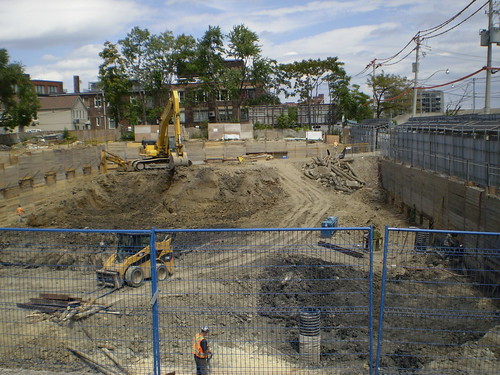
While excavating the property at 510 King St East in Toronto, workers discovered a lost creek which was heaped with trash - some of which is now treasure.
Recently Dumpdiggers admin were treated to a fascinating account of valuable antique glass bottles and early Canadian pottery being recovered from construction site in downtown Toronto. The building project at 512 King St E is owned by a hip property developer called Streetcar. The site is located on the north side of King St. at River St which almost as far east on King as you can go – its opposite St Lawrence street which is the north western extremity of the massive River City condominium development.

By comparison, the relatively small 'Streetcar condos' building project on the north side of King St is well under way, and will probably be completed by the summer of 2011. But back when this property was still being excavated, in July 2010, the developers found plenty of evidence of a small creek that ran above ground here, up until the early 1880s. This creek was yet another tributary of the mighty Don River that was buried by man before the turn of the century.

Evidence of a lost creek under Toronto


The old glass jars and cream coloured stoneware beers floating on the top of the puddle at the bottom of the excavation are all that remains of a centuries old dump site that served industrial age Toronto. You can see the water is being sucked out of the hole by sump pumps. When these photos were taken, the spring water was drained into the storm sewers on the south side of the property and bottles were popping up all over the place.
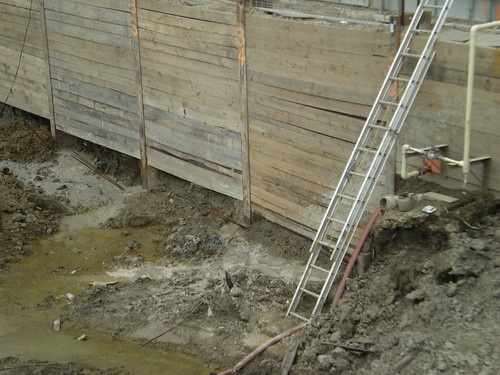
evidence of a lost creek under 510 King St Toronto
The construction site manager was very helpful and accommodating, and was himself an expert in the history of the site. He shied away from my camera of course; posing for pictures on a job site can be risky. But to his credit, he was very forthcoming with good information. ‘The creek has no name' he said in provocative tone, and his words echo in my thoughts.
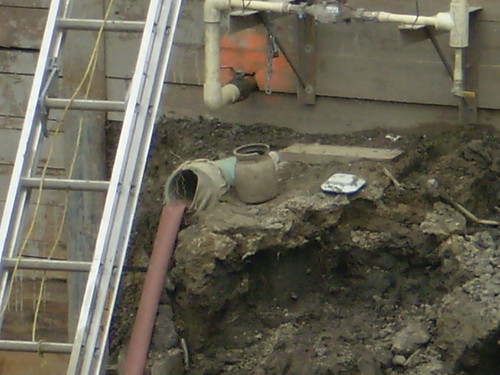

While pointing outside from behind his comfortable desk in the heated office trailer, he told me how the north facing wall of the excavation, and now the building's foundation is engineered with specific water collecting apparatus to channel the accumulation into nearby municipal storm sewers.
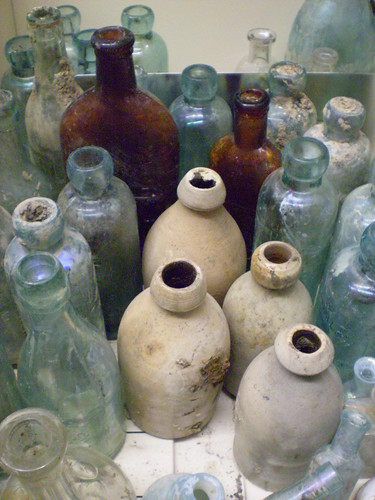
early Canadian glass bottles
A good storyteller, the construction site manager recounted the hot July days when the backhoe operator dredged out several tones of metal debris that had been dumped and incinerated over a hundred years ago. Back then the natural water system was deliberately buried under the heaviest man-made materials available; industrial age iron scraps, building stones, broken bricks and cement was dumped here to suffocate the spring. The refuse also contained wagon loads of hundred year old household trash. The rubbish was incinerated in keeping with period legislation about dump maintenance with respect to hygiene, so only the strongest, luckiest bottles survived.

Q.S GRAINGER HOTEL KEEPER TORONTO CANADA 1880 BEER BOTTLE
Q.S GRAINGER beer bottle, Toronto hotel keeper, 1880
The Dumpdiggers reader who contributed information to this story reported that this Q.S Grainger stoneware beer bottle came from this dig site. It was hand-turned on a pottery wheel by an unknown local potter in the 1880s. There are only a few remaining with this stamp, and every specimen is unique. He also wrote that, "There was an assortment of Toronto blob top pint & quart soda water bottles, many medicine bottles from Canada & USA, glass & stoneware, ink bottles, stoneware jars & pottery items. There was even one amber & one aqua glass fire grenade bottles! A few pot lids from the UK. A total of about 300 blown bottles that date from 1870 to 1905. This lot had a creek running from north to south of the property and it was filled in through many years with ashes. Mixed in the ash were numerous bottles. The workers only picked up the embossed bottles that were worth money and left the unembossed ones that were not worth someones time to clean."

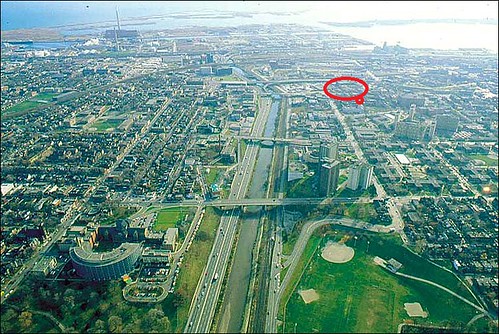
Origins of the lost creek and its path to the Don River,
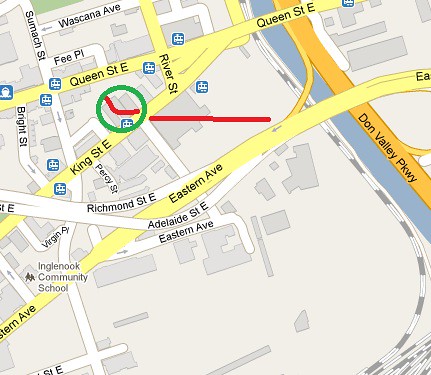
The lost creek originates from a natural spring just north of the excavation site. In the 1880s it was on the surface and ran south through this property and what is now the River City condo developments property, the future site of the Pan American games in 2014.


The lost creek fed into the Don River.

The Don River Straightening Project helped Toronto become a better city, but it also created rich pockets of good historic trash for Toronto diggers to unearth for centuries to come. Let me tell you a story about the Don River in Toronto in the late 1800s. The people of this great city have had a love / hate relationship with the Don since the origins of the British settlement in the 1790s. straight Don River in TorontoOne hundred years later, desperate to stop the flooding, and to provide a shipping channel and to create additional industrial land near the lake, a vast scheme known as "the Don Improvement" was carried out in Toronto. The project straightened the river south of Gerrard St to make room on either side for railroads, roads and other urban infrastructure. Ashbridge's Marsh was drained and filled, eliminating a public health concern, while providing acres of new industrial land in the Port Lands. The expansion of the city in the early 1900 buried the last traces of the creek that once ran across 512 and 510 King St East.
Are these posts the remnants of a small bridge?
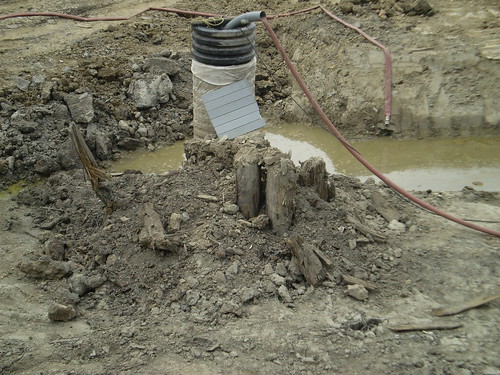
As you can see, wooden posts were visible at the bottom of the hole. Let me remind you that the bottom of the hole was almost ten feet below the surface of present day King St East. Were these wooden posts part of a small bridge across the lost creek? Picture that if you can, and its easy to see residents walking and talking... No doubt some of the antique glass soda bottles were discarded by the users themselves immediately after consuming the contents. Soda bottles are exactly the kind of rubbish that get's pitched by hand, while the milk bottles and medicines are more typical of a systematic municipal trash disposal program at the site.
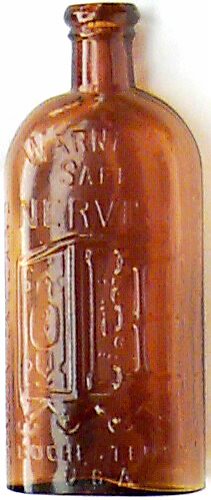
One of the best bottles that was recovered was this amber Warner's Safe Cure which was a popular patent medicine. Because it has the names of three cities embossed in the glass, its what's known today as a 3 city Safe Cure.

3 CITY NERVINE 1/2 PINT 1889
WARNER’S ~ SAFE ~ NERVINE ~ LONDON - ENGLAND (LEFT SIDE) TORONTO - CANADA (RIGHT SIDE)~ ROCHESTER ~ N.Y. U.S.A. HALF PINT, AMBER, DC. This bottle's value is approximately $500 as per the Werner's Reference Guide blogspot. The website is definitely worth perusing if you have any Warner bottles in your collection.

Another excellent source of information on Warner Patent Medicine bottles is the Warner's Safe Cure Blog which is the product of a skilled writer that lives his passion for this specific type of antique glass. I've just spent three hours reading sixty posts on his site.

Thursday, November 25, 2010

American Pickers is a new cable TV show about buying and selling old stuff


Good news for Dumpdiggers all over the world – US cable television audiences have rediscovered a love for antiques and collectibles! Now there’s more than just Antiques Roadshow on the boob tube to educate and entertain collectors.


Much like the TV show Pawn Stars, the new TV series that I watch at 10pm on Tuesday nights on History Canada mines the drama of bartering, and the human exchange of words and emotions as buyers and sellers try to find common ground.

Unlike Pawn Stars, which is a cable TV show that's coloured by people who want or need the money, Mike Wolfe and Frank Fritz, the American Pickers travel great distances to deal with people who're usually more than a little reluctant to sell. And there’s the conflict. TV and indeed all storytelling mediums require somebody versus somebody or something to make interesting drama. Pawn Stars has a dysfunctional family dynamic going on, and The Traveling Antiques Road Show often pitted experts and against collectors. Here its different – the conflict comes from Mike and Frank and their desire to buy commodities that are not for sale. And therein lays the biggest single problem with the show. It’s just not real enough, and the numbers don’t quite add up.
These two experts travel around Iowa, the greater Midwest, and the Southern United States in a white panel van that’s emblazoned with their red and black Antique Archaeology business logo. Unlike real pickers who peruse antiques barns, yard sales and estate auctions, these guys show up uninvited at people's houses and attempt to buy their cherished antiques and collectibles. They are assisted by Danielle Colby-Cushman, who works remotely from a home base in LeClaire, Iowa to help them run their business.

According to the site’s web copy, Mike Wolf has earned a reputation as one of the country's foremost foragers, traveling coast to coast in search of forgotten treasures. Where other people see dilapidated barns and overgrown yards, Mike sees goldmines packed with rare finds and sensational stories. Wolfe and Fritz go prospecting in the homes of casual collectors, hoarders and people who have inherited large deposits of their ancestors junk.
What do the guys pick up exactly?

The Antique Archeology duo seems to get real excited by old musical equipment, vintage kitchenware, all manner of advertising signs and rare bits of scrap metal. They like old automobiles evn if they're only good for auto parts - they'll even buy old rusty bicycles. Fritz has a fondness for antique toys, antique oil cans, and Honda motorcycles.
The secret to being a picker is having a strong base of curious customers that can fuel such prospecting expeditions with ready cash. Mike's clients include interior designers, art directors, photographers and collectors. And although it’s probably the most important part of the business – it’s significant that we never get to see these people. When the acquisitions are finalized and the items are being loaded into the van, the producers of the show will flash graphics showing the amount paid and the amount at which the item has been valued… well anyone that’s actually in this business knows that’s just a hopeful guess. Not every item sells and in their business model the margins are so tight that if one item fails to sell it will ruin their month! I know... its just television.

These images are snapped from my TV set during the "Super Scooter" episode. The half hour shows how the pair works together. Wolfe is nearly drooling over a Vespa Ape scooter. The owner wants $5,000 for it, and Wolfe offers $4,500 -- which is rejected.

Season 2 premiered June 7, 2010 and turned into a real monster Monday hit for History when it was paired with Pawn Stars. American Pickers debuted with more than three million viewers and this month has approached four million, placing it among the 20 top-rated shows on cable.

see also

http://www.rcreader.com/news/american-pickers-feature/

and because Frank is my favourite of the two pickers, here's a link to his site:

http://www.frankfritzfinds.com/

Sunday, October 17, 2010

The 2010 Four Seasons Bottle Collectors, Oct 16th General Meeting with Wooden Bottles, Rare Nervaline, And Hearts Everywhere

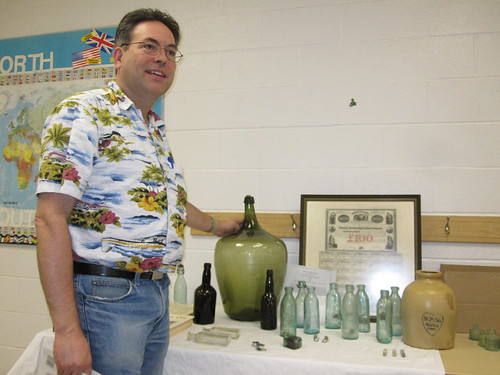
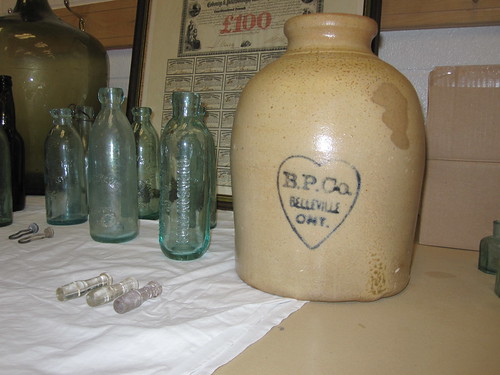
Sean Murphy during the Show & Tell handles his big demijohn, and details his summer finds, including the framed unsold Cobourg Peterborough Railroad stock certificates visible behind an array of rare Hutchinson soda bottles, and some Matthews gravitating stopper bottles, with the original glass stopper rods. The stoneware crock is something we'll discuss later...

October 16th 2010, Dumpdiggers showed up unannounced at the Four Seasons Bottle Collectors Club General Meeting.

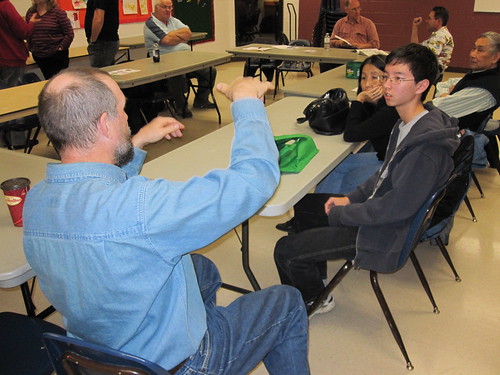
Inside the meeting room in the Arbour Heights Community Center and Wilson and Avenue Rd in Toronto Ontario, I Rob Campbell found a welcoming community of experts that generously share with me (and you) their most precious insights, and hard-to-find data that is priceless information. These folks will do anything and everything possible to forward the search for rare Canadian bottles. Indeed it's the hunt for those elusive treasures that always evokes the best discussions - that and the display of strange objects, ideas and the talk of treasures-unknown always sidelines the official minutes. You have to be a bottle collector to truly appreciate the width and breath of their knowledge and understanding of colonial age and early industrial age goods. They collect the first bottles, glass and pottery pieces made in Canada. They know Canadian manufacturing and retailing companies better than most university educated historians esp as it pertains to packaged goods in glass bottles. The seventeen people present at the event are a fraction of the membership. The folks were there to make decisions about shows and displays, and talk about their summer finds. Indeed half of those that attended brought something to share and discuss.

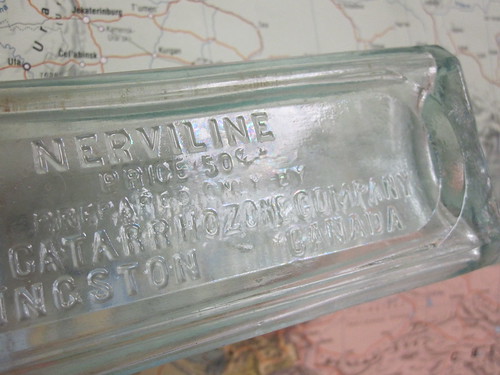
This picture of a rare Nerviline bottle, procured by a veteran Canadian antiques picker named Mike Duggan, is from Kingston Ontario Canada is a prime example of the level of sophistication...

Thanks Mike Duggan. I just love this picture because it shows the price of the product; the value of 50cents is stamped into the glass. Does that make this an early mistake? Its definitely a rare isotope of common bottle and a legendary product line. Yes this bottle is very rare indeed. You can imagine the problems that caused. If you are a general store retailer in the early 1900s and you want to raise or lower the price of Nerviline, you cant change the price from fifty cents a bottle without some explanation.

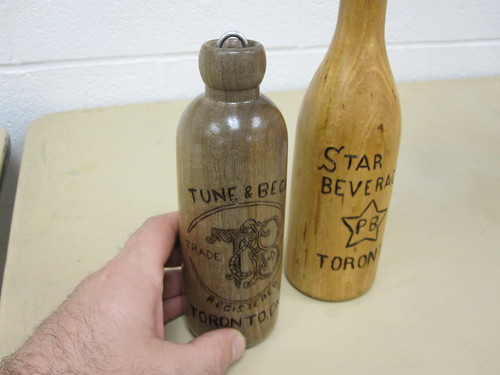
Also in the meeting we got to see the famous wooden bottles by Erik Tounonen that have inspired so much talk online.

That's right Erik's hand turned and carved wooden bottles are being discussed by bottle collectors all over the world. This young bottle digger is fifteen years old, and has sparked conversation on popular discussion forums. Here's Erik T wooden bottles debut thread on Antique hyphen Bottles dot Net discussion forum. Erik is only 15 yrs old . He showed up with a parent, who asked some very interesting questions actually, and she made some interesting remarks too. Everyone gave the young person some new ideas and sparked his bottle bug even more, if that's possible, with more insight into the art and science of finding colonial age dumps in Canada .
More notes about the bottle club meeting would have to include some non emotional reporting of the honest facts, first there was no coffee; an oversight made more profoundly acute by the appearance of gilded coffee cups in one of the displays. Secondly, the frequency and start time of the monthly general meetings was questioned by the Club President, who was the last to arrive and the main reason the meeting started late. lol

The meeting continued with a discussion about the finality of the venue and date for the annual bottle show - same place same date. Personally I was disappointed as I believe the Humber College arena which lacks a natural light source and is NOT handy for any potential consumers living in new condos downtown, is an event failure by design.

The meeting concluded with a random bottle raffle and draw for a mystery prize which was won by the president named Dave , I honestly cant remember Dave's last name and I will update this post to include more information.

Dumpdiggers hopes that by giving inside glimpses of Four Seasons Bottle Club events, I'm raising awareness about what actually happens ... hopefully more people will come out and join up , eager to study and learn the subculture and various antiques classifications relating to antique Canadian glass bottles, early Canadian pottery and British colonial age stoneware. I'm encouraged by the fact that Erik found the association he sought through this portal, and hopeful that I can attract other citizen diggers and passionate bottle collectors with more of the same thought provoking content and ideas.

iMAGINE IF YOU SAW A HEART SYMBOL SOMEWHERE EVERYDAY?
my friend has a strange and powerful curse / gift ... Casie, the curious companion I brought to the bottle club meeting confessed to me earlier yesterday that she sees a heart symbol somewhere, every single day in her life, whether she wants to or not. When she first told me of her gift / curse I laughed - what a wonderful thing to have and notice. But then imagine if that happened to you... How would you feel?

I See HEARTS Everywhere... a blog by Casie Campbell

So of course I was overwhelmed when, much to my surprise, as we walked into the bottle club meeting and glanced at the displays there it was, her heart for the day.


Thanks Sean Murphy for bringing and sharing this wonderful treasure.

Monday, August 16, 2010

Dumpdiggers Help Friends Move into Old Buildings

Don't Be So Eager To Avoid Helping Friends Move, esp if the are moving into a centuries old building located in one of the oldest parts of Toronto.

A wise man who still has a strong back should eagerly volunteer to help friends move. Yes I know it sounds strange, and somehow counter intuitive, but like the god Bokonon says in Kurt Vonagut's Cat's Cradle that "peculiar travel suggestions are dancing lessons from God" by which I interpret to mean that it's good to step out of your everyday circle and do strange things when people ask you to accompany them, esp friends. And especially when they are as eclectic as my friend Clivero. Who has asked not to be lenzed here poor anonymous bloke. I helped the daft bugger move cause he couldn't get anyone else and could barely afford the cube van. And he had some big items down in the basement, one of which was a solid walnut box with some kind of Japanese doors that swing down vertical and of course Clive said nothing when we were lifting it... and it chopped my fingers. Ouch!

But otherwise it was a great day. Yes certainly I'll help clean out old basements full of memories and bad business deals. While sorting boxes I heard the whole story and filled in the blanks as I perused years of collected bits of this and that some trash and some treasure. It wasn't possible to throw out anything and we all walked away with boxes full of stuff. I got some nice wall clocks and a wood plane,

This primitive Canadiana wood plane looks almost homemade, its a classic.

Here's a Smith Corona typewriter still sitting on the shelf where it was abandon twenty years ago when its original owner upgraded to a personal computer.

The shelves of the basement wall systems were stocked with junk that's too valuable to throw away, but not easy to liquidate by any cost effective method.

The Wenzel Projector Company circa 1940
There doesn't seem to be a Wikipedia file or much information about the Wenzel Projector Co. that I can find online, but I did manage to learn that in 1938 they made and sold a 35mm theater sound projector; Wenzel Ace 1939 was a sound projector 16mm? and although theatre projection technology was improving to include better soudn and brighter picture, historians note that Wenzel Ace projector like others on the market at the time, was a direct copy of another competitor named Simplex and their classic design projector produced years earlier.
This is the left arm of a hand cranked reel to reel editor's board spool mechanism. The editor cranks these spools and cuts the footage under the light, cutting between frames. This is how you get to become a director - but cutting a story together and learning what matters. Same's true with blogging

This fellow named Tom A Wilson seems to be positioning himself as the catch-all for antique film projector equipment on the internet. It's a smart idea to use social media marketing to start discussions like Vintage 35mm movie projectors wanted, on photo forums and Wanted: antique film projectors, on photography-on-the-net, and other discussions on other forums. Tom A Wilson is living the job and being that guy, the antique film projector guy. Its smart because he also becomes the go-to guy for other wealthier collectors and he makes a marketplace where none existed before.


Interesting in seeing more old film production and projection equipment? Here is Tom A. Wilson's Flickr photostream in which there are many sets and many categories of antiquities in this obscure but noble genre.

Sunday, June 13, 2010

Four Seasons Bottle Collectors 12 June 2010 Club Dig

The morning of 12 June 2010 appeared grey and overcast. Perfect for digging bottles. The Saturday had been set aside by Dumpdiggers all over the city, earmarked as a day of discovery in the Four Seasons Bottle Collectors 2010 'Club Dig'. The secret location was an old dump in the heart of the city of Toronto.

Old and new diggers gathered together to make the trip. The story is recorded in excruciating detail in a story entitled Digging Bottles with The Four Seasons Bottle Collectors in Toronto.


Carl Parsons is a storyteller and venerated member of the FSBC. He's been an antique dealer specializing in Canadian glass bottles for over thirty years and he knows his way around a couple hundred old dumps in Ontario. He led the tour down into the day's dig site and alongside 'Indian" Al Pothier they selected the exact spot based on shade more than anything else... nobody could remember if the exact spot in this site had been dug before, as the dump is one of the oldest in the city, and the terrain is constantly changing.

The crew got busy right away and dug out a large hole. The soil was soft and light, a gentle mixture of sand and ash with fragments of dump - broken china and bits of brick were visible on the shovels.

Tex and Mac were the new diggers and they worked hard sinking the hole down to a six foot depth. Then the guys got busy with hand trowels and garden forks. Carl put on a demonstration to show how he often uses a hoe with holes cut in the blade (to let water out), but today's dump was dry as a bone. The hole wasnt very deep, about six feet from surface, when Al Pothier declared that they'd hit bottom and now they'd best look to the sides.

Al had a pocket of good dump to the south of his position and Mac and Tex found some hard packed virgin dump to the north of their spot in the hole... but sadly it was under the day's dirt pile and so any excavation in that direction meant moving the dirt pile on the surface. all the same some old sauce bottles were discovered and there were a few exciting moments when some soda shards and stoneware bottoms were spotted in the virgin dump tract at the bottom of the hole.

You can read more of the day's adventure in Digging Bottles with The Four Seasons Bottle Collectors in Toronto in the Shovel Guild Library on Dumpdiggers.com

Tuesday, June 8, 2010

Secrets to Collecting PEZ Candy Dispensers

PEZ Dispensers have been collectible for over 80 years! Two of the most famous North American PEZ dispensers are Mickey Mouse and Uncle Sam. Every serious PEZ collector has a rare and special prize they dream about finding every night. Maybe its 'Eeyore with the line on his face', or one of three different Batman PEZ dispensers, or probably some other super rare variation that only a handful of people even know exist.

The article entitled, On Collecting PEZ Dispensers on Dumpdiggers has more savvy secrets, but doesn't go into much detail on how to tell the age of your PEZ dispenser, nor does it give any good solid facts to help junk store scavengers and eBay pickers.

Did you know that there's a patent number on the stem of each plastic pill popping contraption? The first two digits of that number reflect the year span in which it was manufactured. It's helpful to know the date before purchasing a PEZ® and this information will help.

Want to know the date your PEZ dispenser was manufactured? Pay attention to the first two numbers in the patent. The following list will help you to determine when they were produced.
2.6: between 1952 and 1968
3.4: between 1968 and 1974
3.8: between 1974 and 1976
3.9: between 1976 and 1990
4.9: 1990 to current date

Three Disney Princesses in PEZ


Here are two PEZ dispensers in the hands of Steve Reynolds of ‘It’s a Matter of Time’ antiques at Gerrard and Jones Ave in Toronto.

The Pink Panther Pez Dispenser is very attractive and could be among the more rare models in the years to come, if you believe Sabah Karimi in her article, Pez Dispensers You Don't Own.

She writes, "... the PEZ following really does exist... group of serious PEZ collectors meets at conventions around the country to share the secrets of the trade; from history lessons to hosting a trading post for avid collectors, it's a lifestyle of strategic collecting for these PEZ enthusiasts."

How to Spot rare Pez dispensers today.
This photo shows a close up of the throat whistle in the Shrek Donkey PEZ dispenser. The contrivance makes the distinctive baying sound in keeping with the Eddie Murphy powered voice track of this extremely popular cartoon character. Because of the whistle many of this model of Pez dispensers were well used. Either way I'm sure the whistle feature adds value. Thanks Steve Reynold for giving up a matter of time to show me around your store. Trackback to Robsome blog.

Someone who collects PEZ® dispensers is called a PEZhead. The man who discovered Poly Vinyl Chloride (PVC) didn't patent the process because the material wasn't good for anything in 1880s, but years later PVC pipe and PVC trim is very high demand and used by builders as interior and exterior ornamentation or decorative material to spruce up aluminum siding and cinder block walls. PVC trim is much better than wood for this application.

Monday, May 3, 2010

Vintage Costume Jewellery Show and Sale at Leaside Gardens


Last week I had a great adventure in a world diametrically opposed to the bottle club world and the adventure I'd enjoyed a week previous at the Toronto Bottle Show. Yet in many ways they were similar. I wrote about the 2010 Vintage Costume Jewellery Show and published the article in the Shovel Guild Library on Dumpdiggers, and therein I explored the similarities of experts honing their crafts, after years of learning they become gems.


Remarkable people like Dianne Rawski who gave me a great one on one training about vintage cameo brooches and what to look for when trafficking in this obscure sub category

On 24 April 2010 Dumpdiggers descended on the Toronto Vintage Costume Jewellery Club Annual Show & Sale at Leaside Gardens. There were twenty dealers here vending all manner of collectibles but mostly designer costume jewellery from the 1950's and 60's